25% off on product page · save $4.33
How Often Should You Groom Your Dog? A Care Schedule
Long coats and coats that tangle easily often need more frequent brushing than smooth, short coats. Curly or continuously growing coats may also need regular professional maintenance. Dogs who shed heavily can benefit from brushing that removes loose hair before it collects around the home.
Consider what your dog does each day, too. Outdoor adventures can leave seeds, dirt, and other debris in the coat or between the toes. Swimming and wet weather may mean you need to pay closer attention to moisture around the ears and skin folds.
Instead of relying only on a fixed schedule, make quick checks part of your routine. Run your hands gently over the coat, look behind the ears and under the legs for tangles, and notice any redness, bumps, flakes, or changes in odor. Early attention can make grooming easier and help you decide when to seek advice.
These are starting points, not a prescription. Check ears regularly for moisture or debris, and ask a groomer to recommend a schedule for professional coat maintenance. If you are unsure how to adjust care for your dog’s coat or health, speak with your groomer or veterinarian.
Featured in this guide
Paws and Polish: How Often Should You Groom Your Dog | Digital Guide for Pet Owners | Dog Grooming Schedule & Care Tips
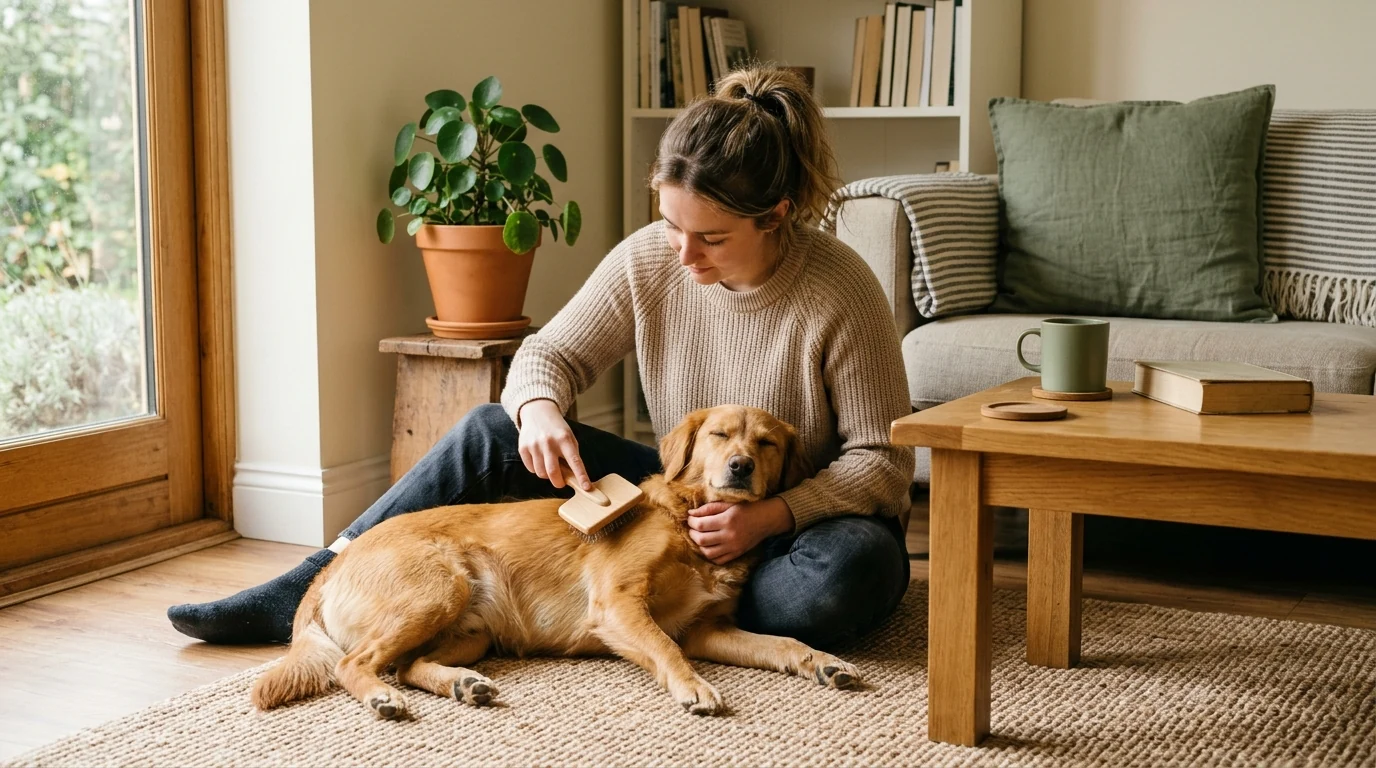
Choose a brush or comb suited to your dog’s coat and work gently in small sections. Look for tangles under the collar and behind the ears. If brushing is uncomfortable or a tangle does not come apart easily, stop rather than pull.
Bathe as needed rather than on a rigid timetable. Use a dog-appropriate shampoo; bathing too often can dry the skin. If your dog has skin concerns, ask your veterinarian about a suitable routine.
Check nails every few weeks, even if walks on hard surfaces wear them down. Look for nails that are getting long, splitting, or catching on fabric. If you are unsure where to cut, ask a groomer or veterinarian for a demonstration.
During ear checks, look for unusual debris, redness, or moisture. Avoid inserting anything deep into the ear canal, and follow your veterinarian’s advice about whether and how to clean your dog’s ears.
Choose tools appropriate for your dog’s size and coat, and keep them in good condition. Never pull through a tight mat or cut close to the skin: skin can be caught beneath tangled hair. A professional groomer can assess the mat and remove it safely.
Contact your veterinarian if nails are painful, skin looks irritated, ears have an unusual odor, or you notice another concerning change. A grooming appointment is not a substitute for examining a possible medical problem.
Our Paws and Polish digital grooming guide focuses on grooming schedules and care tips for dog owners.
Start by noting which tasks your dog needs most often and which ones require professional help. Then revisit the routine when your dog’s coat, activity level, or health changes. Our team also offers the Quiet Your Mind in Conversations guide, a separate resource for readers interested in communication and mindfulness.
Check the product’s listed specifications when evaluating use paws and polish to support your routine.
Before choosing, compare the product details with your daily routine, available space, care needs, and preferred setup. The strongest option is usually the one that fits the intended use clearly and remains simple to clean, store, and check before repeat use.
It is also worth checking measurements, material notes, included parts, and compatibility details so the item matches the way it will be used after delivery.
Overgrown nails can affect walking, snag, or break, and in severe cases may grow into a paw pad. Ask a groomer or veterinarian for help if the nails are very long or trimming is difficult.
An appointment can include check-in, bathing, drying, handling breaks, finishing, and time between stages. Ask your groomer for an estimated pickup time when you book.










Leave a comment